Interpersonal Skills
Develop communication, self-awareness and relationship skills while exploring how we connect and communicate with others.
Newhaven
Whether you’re taking your first steps into counselling, looking to develop your skills or ready to train for a career as a professional counsellor, East Sussex College offers a clear route from Level 1 through to degree level.
With courses available in Eastbourne, Hastings and Newhaven, you can build your knowledge, confidence and practical experience while studying in a supportive learning environment.
You don’t need to have everything figured out before you start. You can begin with the skills you need, discover whether counselling is right for you and progress as your confidence grows.
Find the level that’s right for you

Our counselling pathway gives you the opportunity to progress step by step, from introductory interpersonal skills through to a BSc (Hons) in Person-Centred Counselling.
Develop communication, self-awareness and relationship skills while exploring how we connect and communicate with others.
Develop skills including empathy and active listening while beginning to explore the Person-Centred Approach to counselling.
Explore counselling theory, models, ethics, referral and risk, preparing you for progression into higher-level study.
Train towards professional counselling practice through academic and experiential learning, including 100 hours of placement work.
Deepen your theoretical knowledge and professional practice and turn your Level 5 qualification into a full degree.
There isn’t one typical person who chooses to study counselling.
You might be considering a complete career change. You might already work in a people-focused role and want to develop your skills. You might be returning to education after years away. Or you might simply have reached a point where you want to do something that feels meaningful.
That’s why our counselling pathway gives you different points to start and different ways to progress.
For many adult students, going back into education can feel like a big decision.
Our students have balanced counselling study with work, family and other commitments.
Felicia Kahin returned to education while working and raising her family. She chose a Foundation Degree in counselling because it allowed her to continue working while gaining a professional qualification.
“I was able to keep my full-time job throughout the Foundation Degree. The only costs I really had to think about were tuition fees and travelling to college. I didn't have accommodation costs and I didn't lose my income.”
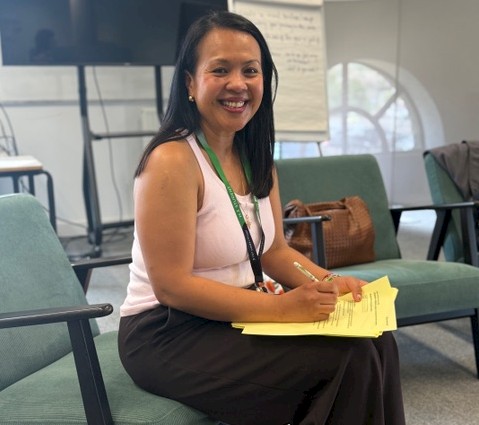
For Felicia, studying at college also meant having tutors who understood the challenges of returning to academic study.
“Most of us hadn't written an academic essay for years. The tutors understood that. They didn't expect us to know everything already, and they were always there when we needed them.”
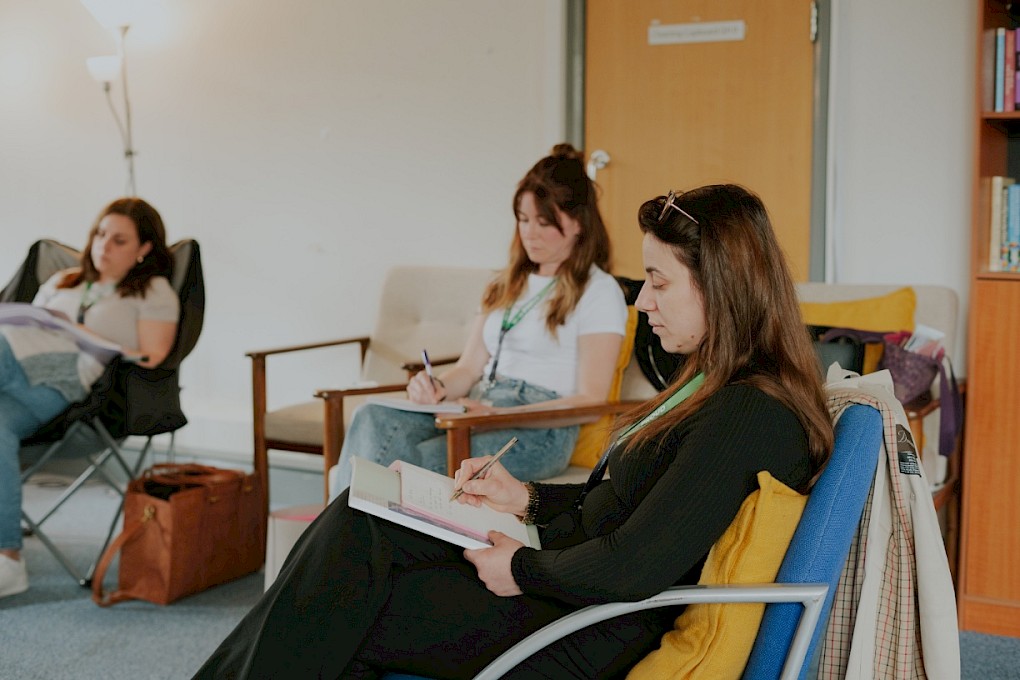
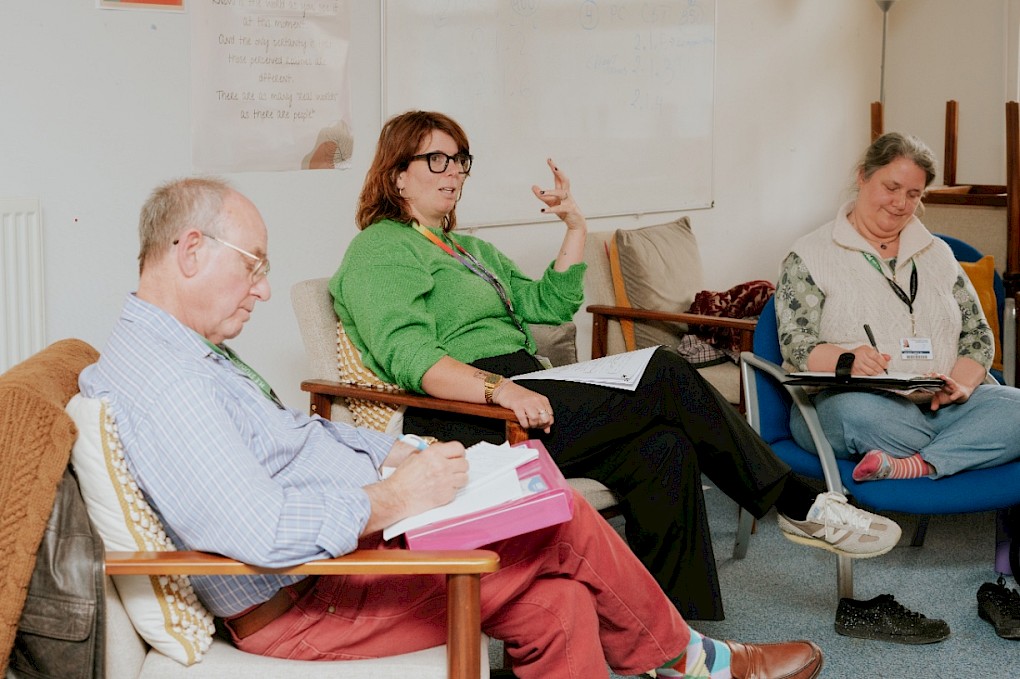
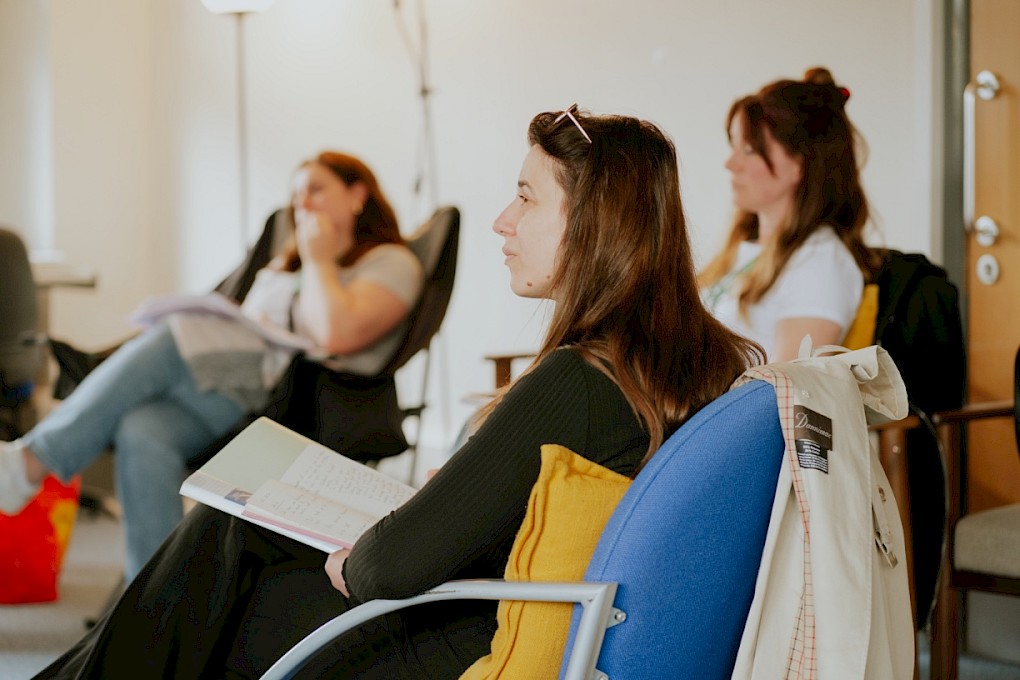
Counselling is about people. So while academic knowledge matters, developing the ability to listen, reflect, communicate and build therapeutic relationships is just as important.
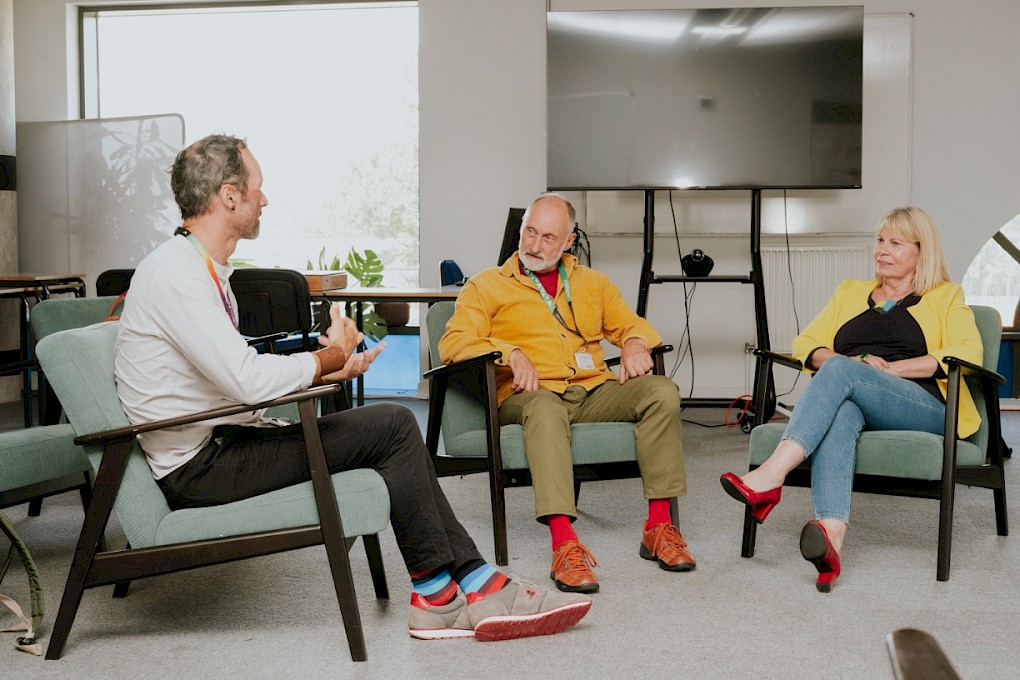
Our higher-level counselling courses combine academic study with experiential learning, including group work, discussion, creative activities and counselling skills practice.
As Person-Centred Counselling student Rae Faulkner explains:
“This course also provides a balance of experiential and academic learning which appealed to me; a mixture of taught theory, discussion, group work, presentations, creative work and counselling skills practice. This course offers a very engaging way of learning.”
That approach continues as you progress through the programme, helping you connect theory with practice and develop the skills, knowledge and self-awareness needed for counselling.
Start at Level 1 and progress through to degree level, with different entry points depending on your experience and qualifications.
Our Foundation Degree in Person-Centred Counselling is accredited by the British Association for Counselling and Psychotherapy (BACP).
Our Foundation Degree and BSc (Hons) courses are validated by the University of East Anglia (UEA).
Higher-level students gain practical experience through supervised placement work, helping connect academic learning with professional practice.
Learn from qualified and experienced counsellors in a supportive learning environment.
With counselling courses available across Eastbourne, Hastings and Newhaven, you can find a route that works for you without necessarily having to move away to study.
Our students regularly highlight the support they receive from tutors and the collaborative nature of learning.
Silvia Spankova, who studied Person-Centred Counselling, says:
“The college gave me the support to achieve my goals, balance study with work and family, and gain a qualification that boosted my personal and professional development.”
A qualification in counselling can open the door to a wide range of opportunities.
Our qualified students have gone on to work in areas including:
Your qualification can also provide opportunities for further study and professional development.

Not necessarily. Our pathway starts at Level 1, giving beginners the opportunity to develop foundational interpersonal and communication skills before progressing further.
Our students have successfully balanced counselling study with employment and family commitments. Course patterns vary by level, so check the individual course pages for current timetables.
Counselling courses are available across East Sussex, including Eastbourne, Hastings and Newhaven. Availability varies depending on the level.
Yes. Our pathway is designed to provide progression from introductory study through to degree level, subject to meeting the entry requirements for each stage.
The Foundation Degree in Person-Centred Counselling is accredited by the British Association for Counselling and Psychotherapy (BACP) and validated by the University of East Anglia.
At Foundation Degree level, students complete at least 100 hours of placement work and receive supervision as part of their training.
The Foundation Degree is a stage towards professional practice and accreditation. Professional requirements can vary, so students should check the current requirements of relevant professional bodies and employers.

Whether you’re curious about counselling, developing skills for your current role or ready to retrain for a new career, there’s a place to start.
Level 1
New to counselling? Start here.
Level 2
Build your counselling skills.
Level 3
Explore counselling theory and practice.
Level 5
Train towards professional counselling practice.
Level 6
Take your counselling qualification to degree level.
Explore our counselling courses and find the right starting point for you.